
Introduction

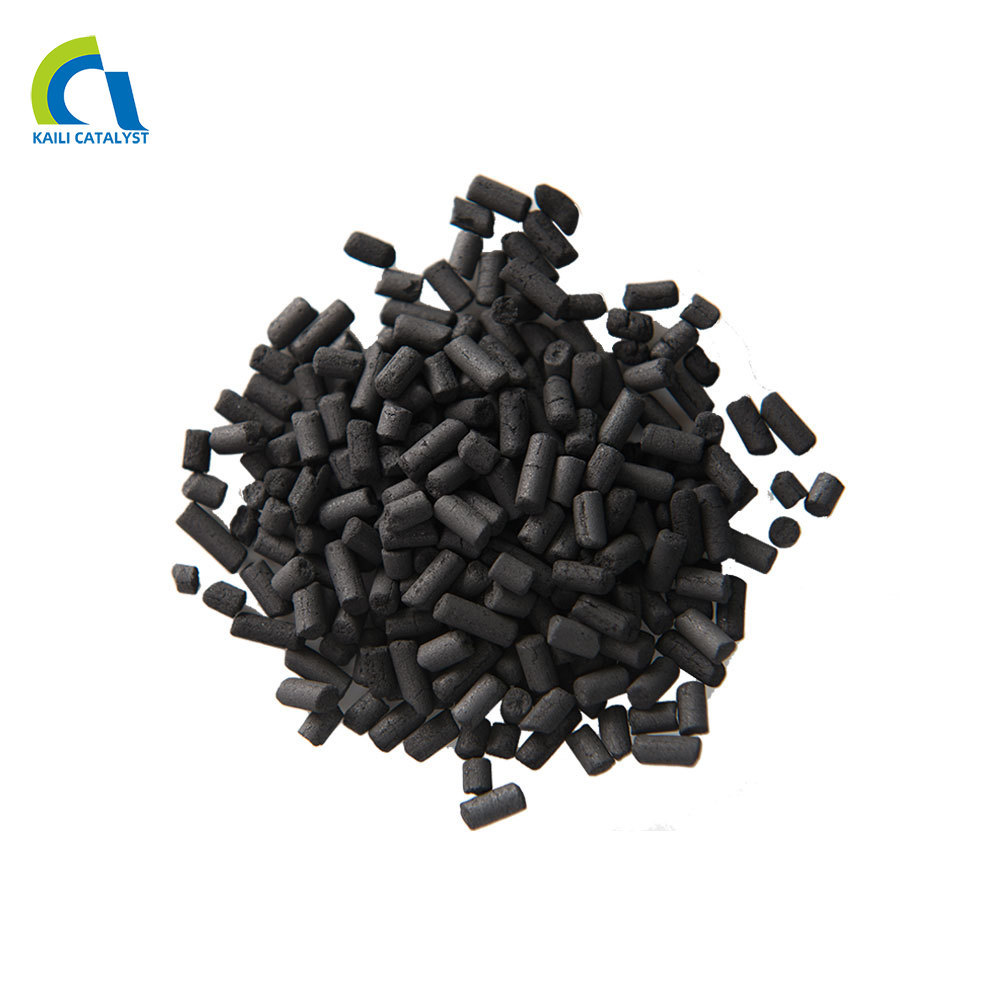
Platinum on Alumina
The platinum content can vary from 0.1% to 10%. It can be used for hydrogenation of aromatic aldehydes, aniline, nitroaromatic and aliphatic compounds.
Key words:
platinum
alumina
chemical
Classification:
Detailed Description
The platinum content can vary from 0.1% to 10%. It can be used for hydrogenation of aromatic aldehydes, aniline, nitroaromatic and aliphatic compounds. It can also be used for purifying industrial gas.
|
Classification |
Catalyst |
MF |
Platinum on Alumina |
|
platinum Content
|
0.1%-10% |
Cas No. |
7440-06-4 |
|
Brand Name |
Kaili |
Usage |
Chemical Accelerator |
|
Carrier shape |
tooth ball, ball, column, size 1.5-5mm |
MOQ |
1 gram |
|
Country of origin |
China (Mainland) |
Supply ability |
More than 1 ton a month |
|
Average particle size of the carrier (μm) |
Adjustable according to the specific application reaction type and filter equipment |
||
|
Applications |
Hydrogenation of aromatic aldehydes, aniline and its derivatives, nitroaromatic and aliphatic compounds; 2. Purifying industrial tail gas; 3. Hydrogen peroxide production. 4.For Fuel cell. |
||
|
Packing |
can be packed according to user requirements (gram level to kilogram leve. |
||
Platinum on Alumina is a very efficient catalyst. It is far more effective than other catalysts in the industry, including palladium on alumina, nickel on alumina, and so on. It is also capable of performing tasks that other catalysts cannot perform.
Platinum on Alumina is that it is highly durable. The Platinum on Alumina that we manufacture is designed to function optimally for an extended period, ensuring that you get value for your money. This material has a long lifespan, and it is very cost-effective in the long term.
Platinum on Alumina have high resistance to a wide range of environmental factors, including extreme temperatures. This means that it can operate effectively in harsh conditions without deteriorating. This makes it ideal for use in various applications, including oil refineries, petrochemical plants, and many other industries.
Platinum on Alumina is a catalyst that works by promoting chemical reactions that would not otherwise occur. The Platinum that is deposited on the alumina carrier not only promotes the chemical reactions but also helps to control the rate at which they occur.
In essence, Platinum on Alumina helps to accelerate chemical reactions, making it possible to complete complex processes quickly and efficiently. This makes it ideal for use in many industrial applications, where time is of the essence.
MESSAGE
Related Products


Contact Us
No. 4288, Shanglin Road, High-speed Railway New Town, Economic and Technological Development Zone, Xi'an, Shaanxi,China


